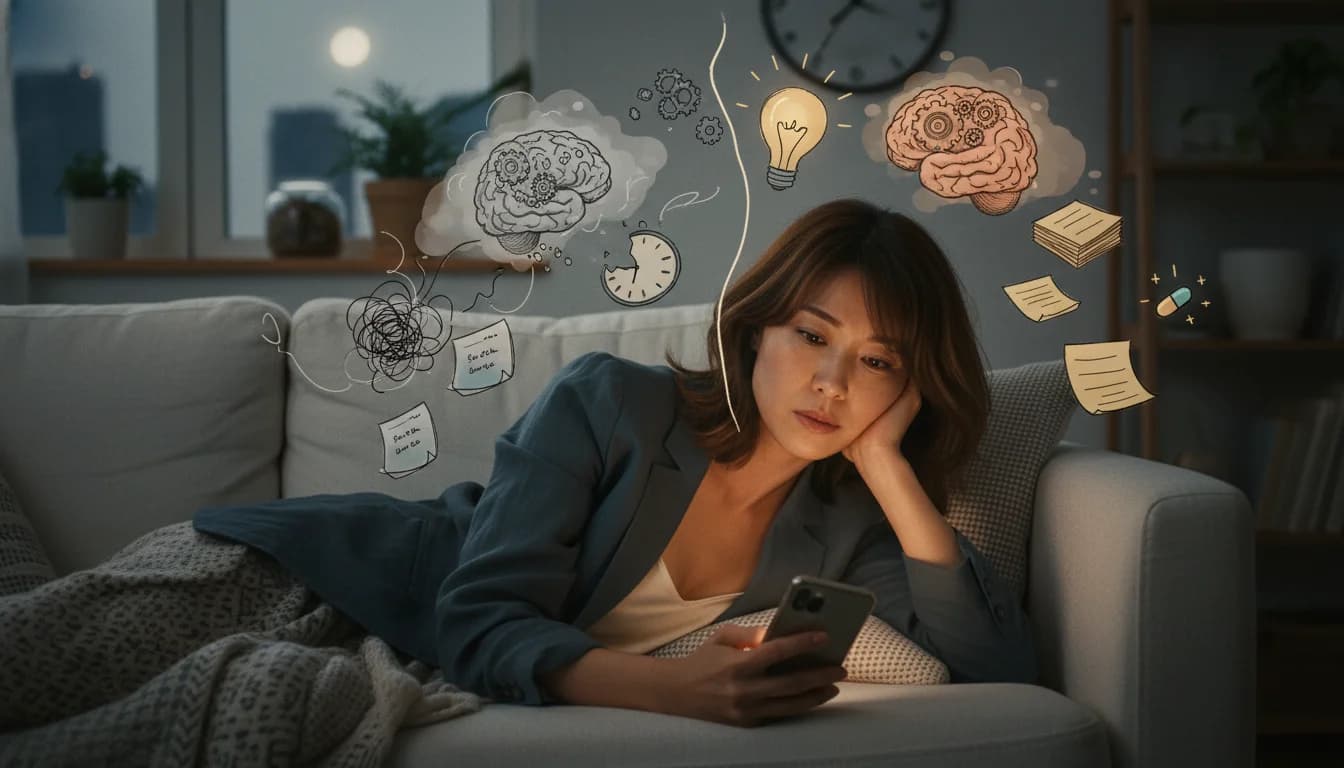
What did the 2025 cell study find?
A Washington University research team led by Benjamin Kay and Nico Dosenbach analyzed brain scans from over 5,000 children and found that prescription stimulants act on brain networks controlling wakefulness and reward, not the attention circuits researchers had long assumed were the primary target. The study, published in Cell in December 2025, represents one of the largest neuroimaging analyses of stimulant effects to date.
The researchers used functional brain imaging to map which neural networks changed when children took stimulant medication. The results were consistent: stimulants activated areas associated with alertness and motivation. The attention-controlling regions of the brain did not show the direct drug effects that previous models predicted (NIH, 2026).
"The improvement we observe in attention is a secondary effect of a child being more alert and finding a task more rewarding, which naturally helps them pay more attention to it."
Benjamin Kay, MD, PhD, Washington University School of Medicine, 2025 [2]
This does not mean stimulants fail to improve attention. Children in the study still showed better classroom performance and cognitive test scores. The shift is in the mechanism: attention appears to improve because the person is more awake and more interested, not because the drug directly sharpens the attention system itself (WashU Medicine, 2025).
How does this differ from the old understanding?
 The older dopamine deficit model focused on attention alone, while newer findings point to reward signaling as the core mechanism.
For decades, the prevailing model held that stimulants work by boosting dopamine and norepinephrine activity in prefrontal cortex circuits responsible for sustained attention, impulse control, and executive function. This model was supported by smaller imaging studies and laboratory research showing that low-dose stimulants enhance signal processing in the prefrontal cortex (Berridge et al., 2011).
That earlier research was not wrong, exactly. It accurately described what happens at the cellular level: stimulants do increase catecholamine activity, and the prefrontal cortex is involved. A 2014 meta-analysis of 14 fMRI datasets found that stimulants most consistently increased activation in the right inferior frontal cortex and insula, areas linked to cognitive control (Rubia et al., 2014). A separate review found that therapeutic doses of stimulants appeared to reduce structural and functional differences between ADHD and non-ADHD brains (Spencer et al., 2013).
The 2025 study does not erase those findings. What it adds is a much larger dataset and a different conclusion about the primary pathway. The distinction matters: if stimulants mainly boost reward and wakefulness, and improved attention follows as a downstream effect, then the treatment target may be different from what clinicians assumed.
It is worth noting that the 2025 findings come from a single study, even though it is unusually large. The older model rests on many smaller studies accumulated over decades. Science rarely flips a switch from one understanding to another. More likely, the full picture involves both pathways, and the new data shifts the emphasis toward reward and wakefulness as the primary mechanism. Future replication studies will clarify how much the model needs to change.
What do reward and alertness have to do with ADHD?
Reward circuits and wakefulness systems are closely tied to the daily experiences that define ADHD. When a task feels unrewarding, the ADHD brain can struggle to generate the internal motivation to stay engaged. When arousal levels are low, sustaining attention on anything, rewarding or not, becomes harder. The 2025 study suggests stimulants may address both of these problems simultaneously.
This aligns with what many adults and children with ADHD describe in their own words: medication does not feel like it forces them to concentrate. Instead, it feels like the task becomes more possible to care about, and the mental fog lifts enough to follow through.
The pharmacology supports this framing. Both amphetamine and methylphenidate increase central dopamine and norepinephrine activity. Dopamine is the neurotransmitter most associated with reward processing and motivation, while norepinephrine plays a central role in arousal and wakefulness (Faraone et al., 2018). The 2025 study's contribution is showing that at the whole-brain level, the reward and wakefulness effects appear to be the primary mechanism rather than a side benefit.
For a deeper look at how dopamine and norepinephrine relate to ADHD neurology, see our guide on what causes ADHD in the brain.
How does this change our understanding of ADHD itself?
The study reframes ADHD less as a pure attention deficit and more as a condition where the brain's reward and arousal systems do not activate reliably for everyday demands. This is not an entirely new idea. Researchers have discussed reward deficiency models of ADHD for years. But having large-scale brain imaging data that points to reward and wakefulness as the primary drug targets gives the model stronger footing.
This framing helps explain several ADHD patterns that the attention-only model struggled with:
- Hyperfocus: If ADHD were simply an inability to pay attention, hyperfocus (intense, sustained engagement with a highly interesting task) would not make sense. A reward-based model explains it: when a task is sufficiently rewarding, the system activates fully, sometimes excessively.
- Inconsistency across tasks: Many people with ADHD perform well on tasks they find engaging and poorly on tasks they find dull, even when both require the same cognitive skills. A reward-driven model predicts exactly this pattern.
- Emotional intensity: Reward circuits are closely connected to emotional processing. Difficulty with emotional regulation, a common ADHD experience, fits a reward-system model better than a pure attention model.
None of this means attention is irrelevant to ADHD. The DSM-5 criteria still center on inattention and hyperactivity-impulsivity, and those symptoms are real. The shift is in understanding what drives those symptoms at a neural level. For an overview of how stimulants relate to the calming effect many people with ADHD report, see why stimulants calm ADHD.
What does this mean for schools and classrooms?
 Reward-based models help explain why students with ADHD can hyperfocus on engaging tasks but struggle with routine assignments.
The study found that stimulant medications produced brain activity patterns that resembled the effects of adequate sleep. Children with ADHD who took stimulants and children without ADHD who got enough sleep showed similar patterns of improved classroom grades and cognitive test scores (NIH, 2026).
This has practical implications for education. If wakefulness is a primary pathway through which stimulants help, then sleep quality becomes a treatment-relevant variable, not just a lifestyle recommendation. Kay noted that addressing inadequate sleep should be considered alongside medication for children being evaluated for ADHD (WashU Medicine, 2025).
For educators and parents, this suggests several concrete steps:
Classroom and home checklist based on the 2025 findings
Why are boring tasks so hard with ADHD?
The reward-system findings offer a direct explanation for one of the most frustrating ADHD experiences: the inability to complete a task that is straightforward but uninteresting. If the brain's reward circuits do not activate for a given task, the motivation and arousal needed to sustain attention simply are not there. This is not laziness or a character flaw. It appears to be a neurological pattern in how the reward system responds to low-stimulation activities.
A 2018 study of 82 children with ADHD found that methylphenidate improved both cognitive test performance and classroom productivity, with inhibitory control and working memory acting as mediators of the clinical improvement (Hawk et al., 2018). The 2025 findings add context: those cognitive improvements may themselves be downstream of the drug's effects on reward and wakefulness, rather than direct targets.
For adults, this translates into a familiar pattern: the report that needs writing sits untouched for days, but a novel problem at work gets solved in an hour. The task difficulty is not the issue. The reward signal is. Understanding this can reduce self-blame and help adults develop strategies that add external structure or reward to low-stimulation tasks. Our ADHD medications guide covers how different medication types relate to these patterns.
Questions to ask your clinician about reward and motivation
What could this mean for future treatments?
The study opens several research directions, though it is important to be clear that these are possibilities, not current treatments. If reward and wakefulness are the primary pathways, then future medications might be designed to target those systems more precisely, potentially with fewer side effects than current stimulants.
The sleep connection is particularly interesting. If stimulant brain patterns resemble the effects of adequate sleep, then interventions that improve sleep quality might complement or, in some cases, partially substitute for medication in managing ADHD symptoms. This is speculative based on a single study, but it aligns with clinical observations that sleep-deprived children and adults with ADHD often see symptom improvement when sleep is addressed.
Research into non-stimulant approaches might also benefit. Current non-stimulant ADHD medications (like atomoxetine and guanfacine) work through different mechanisms. Understanding that the therapeutic target may be reward and wakefulness rather than attention could guide the development of new non-stimulant options that act on those specific circuits.
Several open questions remain:
- Does the reward-wakefulness model apply equally to adults, or is the mechanism different in mature brains?
- Do different stimulant formulations (amphetamine vs. methylphenidate) affect reward and wakefulness circuits in the same way?
- How much of the therapeutic benefit comes from reward activation versus wakefulness, and can these be separated?
- Can behavioral interventions that target reward processing (such as gamification or structured incentive systems) produce measurable changes in the same brain circuits?
These questions will take years of additional research to answer. For now, the practical takeaway is that stimulants work, the mechanism appears to be different from what was assumed, and sleep deserves more attention as part of ADHD management.
If the reward-and-wakefulness pattern in this article fits your own experience of unstimulating tasks feeling impossible, a short adult ADHD self-check can help you describe those patterns to a clinician in concrete terms.
 Infographic: key points about adhd stimulants reward brain.
Cell-level research is reshaping our understanding of why stimulants help with ADHD, shifting focus from simple dopamine levels to reward pathway signaling.
Infographic: key points about adhd stimulants reward brain.
Cell-level research is reshaping our understanding of why stimulants help with ADHD, shifting focus from simple dopamine levels to reward pathway signaling.
The practical synthesis is straightforward: stimulants still improve outcomes, but the best current model emphasizes arousal and reward-circuit effects rather than a simple "attention switch" story [1][2][3].
Frequently asked questions
Do stimulants still work for ADHD even if the mechanism is different?
Yes. The 2025 study does not question whether stimulants improve ADHD symptoms. Children in the study showed better classroom grades and cognitive test scores on medication. What changed is the explanation for how that improvement happens: through reward and wakefulness circuits rather than direct attention enhancement (NIH, 2026).
Does this mean ADHD is not really an attention problem?
ADHD still involves real difficulties with sustained attention. The study suggests that those difficulties may stem from how the brain's reward and arousal systems function rather than from the attention circuits themselves. Attention problems remain a core symptom, but the underlying cause may be different from what was previously assumed.
Should I change my ADHD medication based on this study?
No medication changes should be made based on a single study. Discuss any questions about your treatment with your prescribing clinician. The 2025 findings are scientifically important but do not yet translate into specific changes in clinical practice.
How does sleep relate to ADHD stimulant effects?
The study found that stimulant medications produced brain activity patterns similar to those produced by adequate sleep (WashU Medicine, 2025). This suggests that sleep and stimulants may work through overlapping brain pathways. Addressing sleep problems may support ADHD management alongside medication.
How large was this study compared to previous research?
The 2025 study analyzed brain scans from over 5,000 children, making it substantially larger than previous neuroimaging studies of stimulant effects. For comparison, a 2014 meta-analysis combined 14 fMRI datasets totaling 212 children (Rubia et al., 2014). The larger sample size gives the new findings more statistical power.
Does this study apply to adults with ADHD?
The study focused on children. Whether the same reward-and-wakefulness mechanism applies equally in adult brains is an open question. Adult ADHD involves the same neurotransmitter systems, but brain development and life experience may affect how these circuits respond to medication. More research in adult populations is needed.
What is the reward system in the brain?
The brain's reward system is a network of structures (including the ventral striatum and associated dopamine pathways) that processes motivation, pleasure, and the drive to pursue goals. In ADHD, this system may not activate reliably for everyday tasks, which can make routine activities feel disproportionately difficult even when the person understands their importance.
Can improving sleep reduce the need for ADHD medication?
The study suggests sleep and stimulants affect overlapping brain pathways, but this does not mean sleep can replace medication. For some individuals, improving sleep quality may reduce symptom severity, but this is a conversation to have with a clinician who can evaluate the full clinical picture. Sleep interventions and medication are not interchangeable.
Why do people with ADHD hyperfocus on some things but not others?
A reward-based model of ADHD helps explain hyperfocus. When a task generates a strong enough reward signal, the brain's motivation and arousal systems activate fully, sometimes excessively. Tasks that do not generate that signal leave the person struggling to sustain engagement. This is consistent with the 2025 finding that stimulants work primarily through reward circuits.
Does this study change how ADHD is diagnosed?
Not at this stage. ADHD diagnosis still relies on behavioral criteria (patterns of inattention, hyperactivity, and impulsivity as defined in the DSM-5). Brain imaging is not currently used for routine ADHD diagnosis. The study changes the scientific understanding of how medications work, which may eventually influence treatment approaches but does not alter diagnostic criteria.