How the ADHD brain actually works
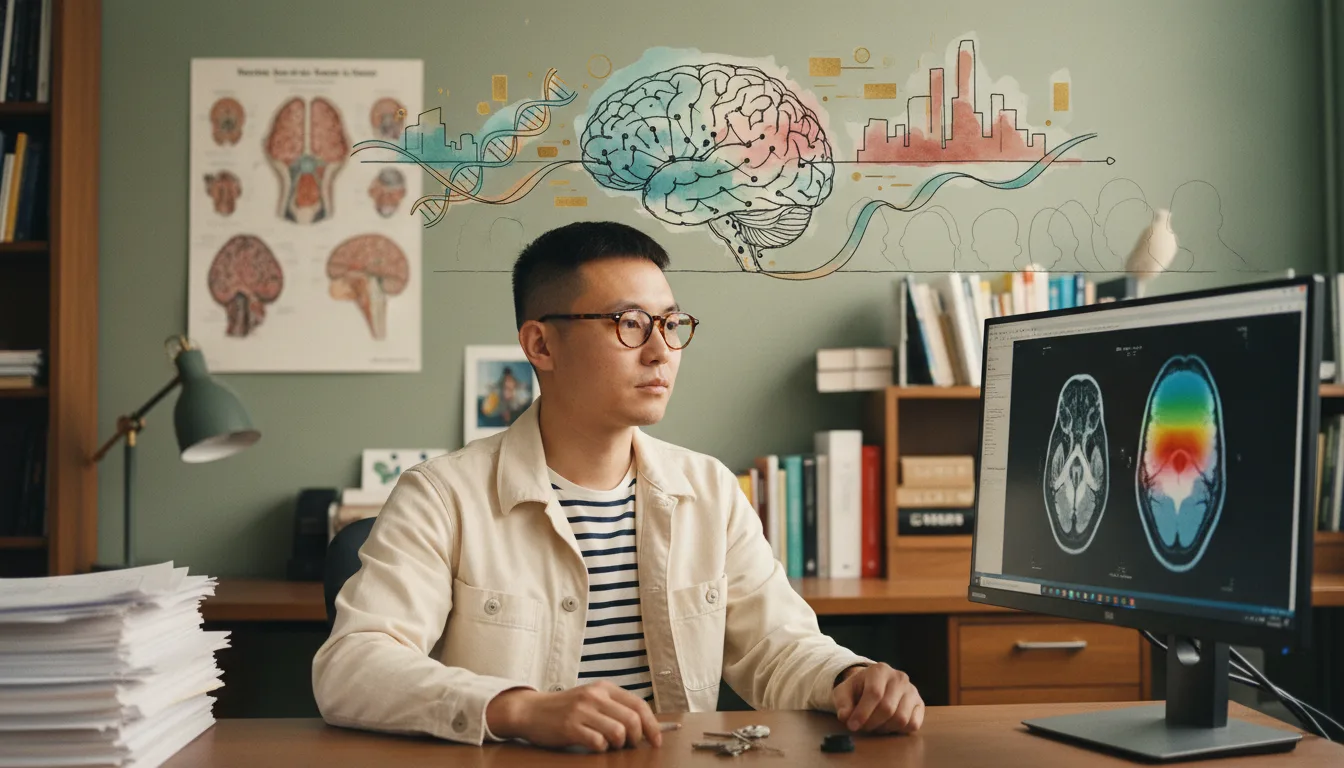
The ADHD brain is not damaged or deficient. It differs in specific, identifiable ways from neurotypical brains, primarily in regions responsible for attention, planning, impulse control, and reward processing. These differences are structural (the physical size and shape of certain areas) and functional (how those areas communicate and activate).
Structural imaging studies show that brains of children with ADHD tend to be smaller in certain regions compared to unaffected controls, with the prefrontal cortex, basal ganglia, and cerebellum most consistently affected (Curatolo et al., 2010) [1]. Evidence also points to reduced connectivity in white matter tracts, the wiring that links brain regions together.
It is worth emphasizing what "smaller" means here. These are group-level statistical differences, not something visible on an individual brain scan. You cannot diagnose ADHD from an MRI. But across large studies, the pattern is consistent enough to tell us that ADHD involves real neurobiological variation. For more on what brain imaging can and cannot reveal, see our article on ADHD brain scans and what they show.
A 2024 review in Nature Reviews Disease Primers described ADHD as having "extensive minor structural and functional brain differences" alongside diverse symptom presentations and neurocognitive impairments (Faraone et al., 2024) [2]. The word "minor" matters. No single brain difference is dramatic on its own. The cumulative effect of many small differences, acting together, is what produces the symptoms people experience.
How do neurotransmitters contribute to ADHD?
Dopamine and norepinephrine are the two chemical messengers most consistently linked to ADHD. Both are catecholamines, a class of neurotransmitter involved in attention, motivation, arousal, and executive function. Research suggests that ADHD involves dysregulation in how these chemicals are produced, released, or received in certain brain circuits.
The prefrontal cortex is highly dependent on the correct neurochemical environment to function properly. Too little catecholamine activity (as in drowsiness or understimulation) weakens cognitive control, and too much (as during acute stress) also impairs it (Brennan & Arnsten, 2008) [3]. This inverted-U relationship helps explain something many adults with ADHD notice: they can hyperfocus under pressure but struggle with routine tasks. The neurochemical conditions that support sustained attention are not reliably available.
Norepinephrine appears to strengthen "signals" in prefrontal networks by stimulating alpha-2A adrenoceptors, while dopamine reduces "noise" through D1 receptor stimulation (Brennan & Arnsten, 2008). When either system is underactive or dysregulated, the result can look like distractibility, forgetfulness, impulsivity, and difficulty sustaining effort on tasks that are not immediately rewarding.
This is also why ADHD medications work the way they do. Stimulant medications increase catecholamine availability in the prefrontal cortex, and research in animals suggests that therapeutic doses preferentially boost norepinephrine and, to a lesser extent, dopamine in this region (Arnsten, 2009) [4]. The medication does not create focus from nothing. It adjusts the chemical environment so the prefrontal cortex can do its job more reliably.
Neurotransmitter systems involved in ADHD
What brain structures are involved?
 Working memory differences in the prefrontal cortex help explain why forgetting items feels so persistent in ADHD.
The prefrontal cortex is the region most consistently implicated in ADHD. Located behind the forehead, it manages executive functions: planning, working memory, attention regulation, behavioral inhibition, and emotional control. Research shows that ADHD is associated with weaker function and structure of prefrontal cortex circuits, especially in the right hemisphere (Arnsten, 2009).
The right prefrontal cortex is particularly important for behavioral inhibition, the ability to stop yourself from acting on an impulse. Lesion studies in animals confirm that damage to this area produces a profile strikingly similar to ADHD: distractibility, forgetfulness, impulsivity, poor planning, and increased motor activity (Brennan & Arnsten, 2008).
Beyond the prefrontal cortex, three other structures appear consistently in ADHD research:
- Basal ganglia (including the striatum): These deep brain structures help select and initiate actions, suppress unwanted movements, and process reward signals. Differences here may contribute to both the motor restlessness and the reward-processing difficulties seen in ADHD.
- Cerebellum: Traditionally associated with motor coordination, the cerebellum also plays a role in timing, attention shifting, and cognitive processing. It is one of the regions that shows consistent size differences in ADHD imaging studies (Curatolo et al., 2010).
- Anterior cingulate cortex: This region helps monitor errors, manage conflict between competing responses, and regulate emotional reactions. Reduced activity here may explain why adults with ADHD sometimes struggle to notice mistakes in real time.
If you are curious whether your own attention patterns might reflect these differences, noting the specific moments when focus slips (task transitions, boring meetings, the first hour after waking) gives a clinician a more concrete picture than a general complaint.
How does brain development differ in ADHD?
ADHD appears to involve differences in the timing of brain maturation, not just the final product. Research suggests that the prefrontal cortex in children with ADHD may mature more slowly than in neurotypical children, with some studies estimating a delay of several years in cortical thickening (Arnsten, 2009).
This developmental lag has practical implications. A child with ADHD may have the attention regulation capacity of someone several years younger, even though their intelligence and verbal ability are age-appropriate. For adults, the pattern shifts. Many people find that some ADHD symptoms improve with age as the prefrontal cortex continues to develop into the mid-twenties. But "improve" does not always mean "resolve." Many adults retain significant symptoms, particularly in executive function and emotional regulation.
ADHD also has a strong genetic component. Twin studies and family research consistently show that heredity makes the largest contribution to the expression of ADHD in the population (Thapar et al., 2012) [5]. But the genetics are not simple. Both rare and common genetic variants appear to contribute, and the same genetic risk factors that influence ADHD are also associated with other neurodevelopmental and psychiatric conditions.
Environmental factors play a role too, though a smaller one. Premature birth, significantly low birth weight, prenatal exposure to alcohol or tobacco, and early adversity have all been linked to increased ADHD risk (Thapar et al., 2012). Research does not support the idea that ADHD is caused by sugar, screen time, or poor parenting, though these factors might worsen symptoms in some individuals (CHADD).
For a deeper look at how genes contribute to ADHD risk, including recent findings on specific genetic variants, see our article on whether ADHD is genetic. Recent research has also identified specific genes, like HOMER1, that may play a role in ADHD susceptibility.
What is the dopamine hypothesis of ADHD?
 Dopamine plays a role in reward signaling, which helps explain why ADHD brains often chase novelty over planned goals.
The dopamine hypothesis proposes that ADHD symptoms arise, at least in part, from reduced dopamine signaling in specific brain circuits. This idea is supported by several converging lines of evidence: genetic studies identifying dopamine-related gene variants in people with ADHD, the effectiveness of stimulant medications that increase dopamine availability, and imaging studies showing differences in dopamine transporter density.
One influential framework is the "reward deficiency" model. This theory suggests that when dopamine signaling is chronically low in reward circuits, the brain seeks stimulation to compensate, which can manifest as impulsivity, novelty-seeking, and difficulty persisting with tasks that offer only delayed rewards (Blum et al., 2008) [6].
Genetic research has identified variants in the DRD2 gene (which codes for a type of dopamine receptor) and other dopamine-related genes that are more common in people with ADHD (Blum et al., 2008). These variants may reduce the number or sensitivity of dopamine receptors in reward-processing areas, meaning the same amount of dopamine produces a weaker signal.
"Genetic, pharmacological, imaging, and animal models highlight the important role of dopamine dysregulation in the neurobiology of Attention-Deficit/Hyperactivity Disorder."
Curatolo et al., 2010 [1]
This helps explain a common ADHD experience: the task you know you should do feels almost physically impossible to start, while something novel or exciting captures your attention effortlessly. The issue is not willpower. The reward signal for the "should do" task may genuinely be weaker in the ADHD brain.
Questions to ask your clinician about ADHD neurobiology
If you are preparing for an assessment or follow-up appointment, these questions can help you understand how brain differences relate to your specific symptoms:
What lies beyond dopamine?
The dopamine hypothesis is useful but incomplete. ADHD is not a single-neurotransmitter disorder. Norepinephrine is equally important in prefrontal cortex function, and the effectiveness of non-stimulant medications like atomoxetine (which primarily targets norepinephrine) confirms that dopamine alone does not explain the full picture.
Research also points to the default mode network (DMN) as a factor. The DMN is a set of brain regions that becomes active during rest, daydreaming, and self-referential thinking, and normally quiets down when you need to focus on an external task. In ADHD, research suggests the DMN may not deactivate as efficiently during tasks that require sustained attention. This could explain the experience of "zoning out" or having intrusive, unrelated thoughts during work or conversation.
Serotonin, glutamate, and GABA are also under investigation, though the evidence for their roles in ADHD is less developed than for catecholamines. The emerging picture is one of multiple interacting systems rather than a single broken pathway.
ADHD also appears to have a predominantly genetic origin that involves both common and rare genetic variants (Faraone et al., 2024). Some environmental correlates have been identified, but establishing direct causation has proven difficult. This complexity is part of why ADHD presents so differently from person to person: the specific combination of genetic and environmental factors varies, producing a spectrum of symptom profiles.
What do researchers still not know?
Honest science writing requires naming the gaps. Despite decades of research, several fundamental questions about ADHD neurobiology remain open.
No single biomarker exists. There is no blood test, brain scan, or genetic panel that can diagnose ADHD. Diagnosis remains clinical, based on symptom history and functional impairment. Imaging and genetic findings describe group-level patterns, not individual diagnostic markers.
Causation versus correlation is often unclear. Many brain differences observed in ADHD could be consequences of the condition (or its treatment) rather than causes. For example, does reduced prefrontal activity cause inattention, or does chronic inattention lead to underdeveloped prefrontal circuits? Longitudinal studies help, but disentangling cause from effect in a developing brain is genuinely difficult.
The heterogeneity problem. ADHD is almost certainly not one condition with one cause. Different people may arrive at similar symptoms through different neurobiological pathways. As Thapar et al. (2012) noted, "ADHD is not a single pathophysiological entity and appears to have a complex etiology" with "multiple genetic and environmental risk factors with small individual effect" (Thapar et al., 2012).
Treatment mechanisms are not fully mapped. Stimulant medications are the most-studied treatment for ADHD, and they clearly work for many people. But the precise mechanisms by which they improve symptoms, and why they do not work for everyone, are still being refined. Animal research suggests therapeutic doses preferentially affect the prefrontal cortex, but translating animal findings to human brains involves assumptions that are not always confirmed.
The adult ADHD brain is understudied. Most neuroimaging and developmental research has focused on children. Whether the structural and functional differences seen in childhood persist, change, or compensate in adulthood is an active area of investigation.
If reading about these brain differences has prompted you to reflect on your own attention patterns, our free adult ADHD self-screener walks through the behaviours that map most directly to prefrontal and reward-system difficulties, a useful first pass before speaking with a clinician.
 Infographic: key points about what causes adhd brain.
Each brain region contributes a different piece to the ADHD puzzle, from attention to impulse control to reward processing.
Infographic: key points about what causes adhd brain.
Each brain region contributes a different piece to the ADHD puzzle, from attention to impulse control to reward processing.
Frequently asked questions
Is ADHD a brain disorder or a behavioral one?
ADHD is a neurodevelopmental condition with a strong neurobiological basis. Behavioral symptoms like inattention and impulsivity arise from measurable differences in brain structure, chemistry, and development, particularly in the prefrontal cortex and catecholamine systems (Arnsten, 2009). The behaviors are the visible expression of underlying brain differences, not a separate category.
Can you see ADHD on a brain scan?
Not at the individual level. Structural and functional imaging studies reveal consistent group-level differences between people with and without ADHD, but no scan can diagnose ADHD in a single person. Diagnosis relies on clinical evaluation of symptoms and functional impairment. Learn more about what brain scans can and cannot show for ADHD.
Is ADHD caused by low dopamine?
The relationship is more complex than "low dopamine." Research suggests that dopamine signaling may be dysregulated in specific brain circuits, particularly those involved in reward processing and prefrontal cortex function (Curatolo et al., 2010). Norepinephrine is equally implicated. The issue appears to be about how these chemicals function in particular brain regions, not simply their overall level.
Does the ADHD brain develop differently?
Research suggests the prefrontal cortex in children with ADHD may mature more slowly than in neurotypical children. This developmental difference can affect attention regulation, impulse control, and planning. Some symptoms may improve as the brain continues to develop into the mid-twenties, though many adults retain significant difficulties.
What role does genetics play in ADHD brain differences?
ADHD has a predominantly genetic origin, with both common and rare genetic variants contributing to risk (Faraone et al., 2024). Heredity makes the largest contribution to ADHD expression in the population (Thapar et al., 2012). However, no single gene causes ADHD; multiple genes interact with environmental factors to produce the condition. Read more about ADHD and genetics.
What is the default mode network and how does it relate to ADHD?
The default mode network (DMN) is a set of brain regions active during rest and mind-wandering that normally quiets when you focus on an external task. Research suggests the DMN may not deactivate as efficiently in ADHD, which could contribute to the experience of "zoning out" or having intrusive thoughts during tasks requiring sustained attention.
Why do stimulant medications help if ADHD involves brain differences?
Stimulant medications increase the availability of dopamine and norepinephrine in the prefrontal cortex, helping to optimize the neurochemical environment that supports attention and behavioral regulation (Arnsten, 2009). They do not "fix" a broken brain; they adjust chemical signaling so existing circuits can function more reliably. Individual responses vary, and medication is most effective as part of a broader management plan.
Can environmental factors cause ADHD?
Environmental factors like premature birth, low birth weight, and prenatal exposure to alcohol or tobacco can increase ADHD risk, but they appear to play a smaller role than genetics (Thapar et al., 2012). Research does not support the idea that sugar, screen time, or parenting style causes ADHD, though these may worsen symptoms in some individuals (CHADD).
Is the ADHD brain "broken"?
No. The ADHD brain differs from the neurotypical brain in specific, measurable ways, but "different" is not "broken." These differences involve variations in structure, chemistry, and developmental timing that affect how attention, motivation, and impulse control operate. Many people with ADHD also experience cognitive strengths, including creativity and the ability to hyperfocus on engaging tasks.
Will ADHD brain differences show up in my children?
ADHD is highly heritable, so children of adults with ADHD have a higher likelihood of developing the condition. But inheritance is probabilistic, not deterministic. Multiple genes contribute small individual effects, and environmental factors also play a role (Thapar et al., 2012). A family history of ADHD is worth mentioning to a pediatrician if you notice attention or behavioral concerns in your child.