Why do so many adults with ADHD crave caffeine?
ADHD involves irregularities in dopamine and norepinephrine signaling in the prefrontal cortex, the brain region responsible for attention, planning, and impulse control (Vázquez et al., 2022) [1]. Caffeine is a stimulant that modestly raises levels of both chemicals. For many adults with undiagnosed or undertreated ADHD, that morning coffee may be the first thing all day that makes the mental fog lift, even a little.
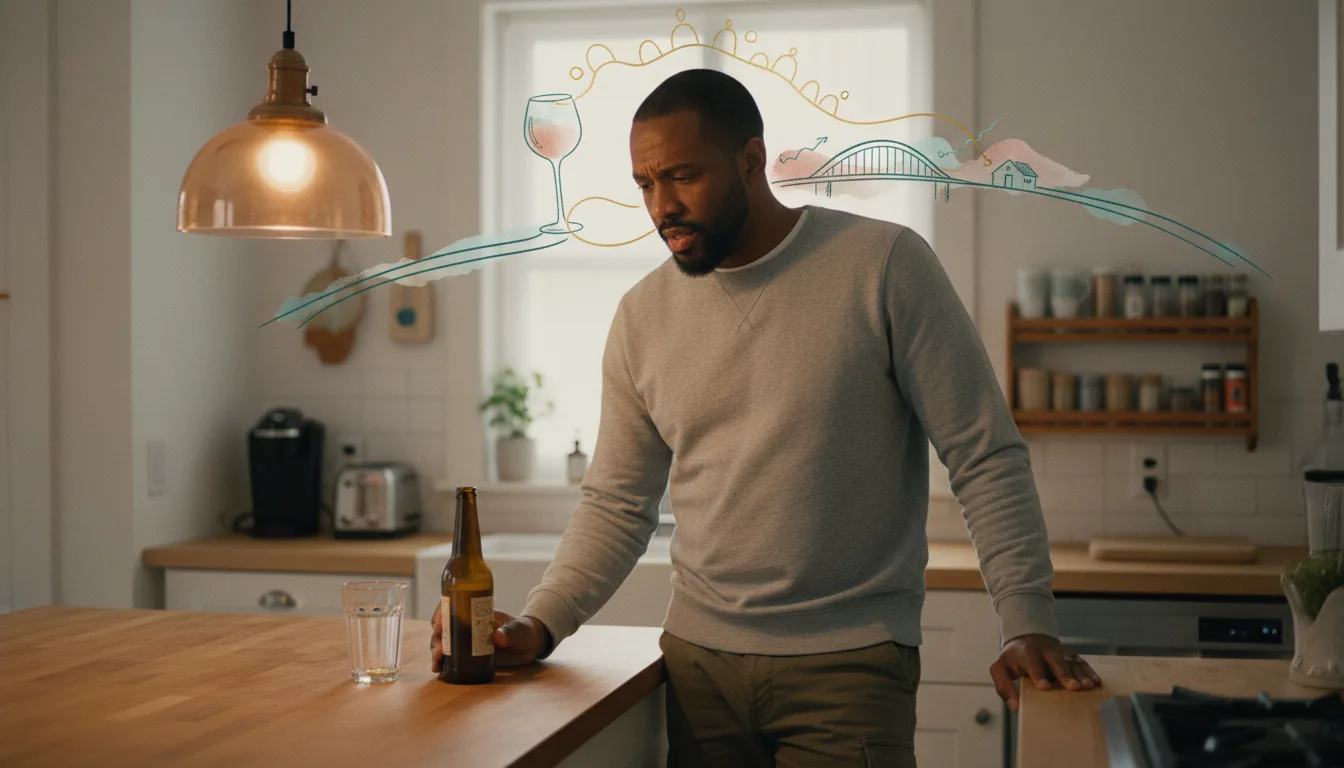
I spent years assuming I just "really loved coffee." Four cups before noon, another after lunch, sometimes an energy drink in the late afternoon. It was not until my ADHD assessment that a clinician pointed out the pattern: I was not drinking coffee for the taste. I was chasing focus.
A 2020 study of US Army soldiers found that those with adult ADHD used significantly more caffeine pills, energy drinks, and other caffeinated beverages than peers without ADHD (Cipollone et al., 2020) [3]. The researchers noted that caffeinated compounds showed negative correlations with some aspects of ADHD symptom severity, suggesting a possible self-medication pattern.
But here is where it gets complicated. A 2022 study of over 2,200 adults found no association between the amount of caffeine consumed and ADHD symptom severity (Ágoston et al., 2022) [2]. What the study did find was that higher ADHD symptoms were associated with more problematic caffeine use (caffeine use disorder), and both were linked to lower well-being. In other words, craving caffeine and relying on it heavily does not appear to reduce ADHD symptoms in a measurable way, even though it can feel like it does in the moment.
Does caffeine actually help ADHD symptoms?
 Caffeine can sharpen short-term focus, but it does not improve the working memory gaps that make reminder systems necessary.
The honest answer is: modestly, in some areas, based mostly on animal research. A 2022 systematic review of animal studies found that caffeine treatment improved attention, learning, memory, and olfactory discrimination in ADHD animal models (Vázquez et al., 2022). One study showed that caffeine normalized dopamine transporter density in the frontal cortex and striatum of ADHD-model rats, improving their attention and cognitive performance (Pandolfo et al., 2013) [5].
Those findings are genuinely interesting. But rats are not people, and the review authors noted that caffeine's effects on hyperactivity and impulsivity were contradictory across studies, with some showing improvement and others showing no change or worsening. The researchers concluded that caffeine's cognitive effects in animal models "could be translated to human ADHD," but that word "could" is doing a lot of work.
"Caffeine treatment increases attention and improves learning, memory, and olfactory discrimination without altering blood pressure and body weight. Nonetheless, the role of caffeine in modulating ADHD-like symptoms of hyperactivity and impulsivity is contradictory."
Vázquez et al., 2022 [1]
In practice, many adults with ADHD report that caffeine helps them start tasks, stay alert during boring meetings, or push through an afternoon slump. Those experiences are real. They are also temporary, inconsistent, and dose-dependent in ways that make caffeine unreliable as a primary strategy.
How does caffeine compare to ADHD medication?
Caffeine is not in the same category as prescription ADHD medications in terms of effectiveness, duration, or clinical evidence. Stimulant medications like methylphenidate and amphetamine-based drugs are the most studied treatments for ADHD, with positive response rates reported for both children and adults (Sogard et al., 2022). WebMD notes that caffeine "hasn't proved to be as effective as prescription medications" and is not generally recommended as an ADHD treatment (WebMD) [6].
If this pattern, chasing focus with coffee all day, feels uncomfortably familiar, our free adult screener is a reasonable next step before you escalate caffeine further.
Some people use caffeine alongside medication, and that can work for some adults. But it requires a conversation with a prescribing clinician, not guesswork. More on that below.
What are the real downsides of caffeine for ADHD?
Caffeine carries specific risks that overlap with vulnerabilities many adults with ADHD already have. The three biggest concerns are anxiety, sleep disruption, and tolerance.
Anxiety amplification. Caffeine increases cortisol and adrenaline. For adults with ADHD who already experience anxiety (a common co-occurrence), more than 400 milligrams of caffeine daily is more likely to cause irritability, restlessness, and racing thoughts (WebMD). The tricky part is that these symptoms can look like worsening ADHD, leading to more caffeine, which makes the cycle worse.
Sleep disruption. This is the one that caught me. Caffeine has a half-life of roughly five to six hours, meaning half of what you drink at 2 PM is still active at 7 or 8 PM. Adults with ADHD already struggle with sleep difficulties at higher rates than the general population. Adding afternoon caffeine to an already-delayed circadian rhythm is a recipe for lying awake at midnight, which leads to exhaustion the next day, which leads to more caffeine. If sleep is a problem for you, this cycle is worth examining honestly.
Tolerance and dependence. Your brain adapts to regular caffeine by producing more adenosine receptors. Over weeks, you need more caffeine to get the same effect. The Ágoston et al. (2022) study found that caffeine use disorder severity was associated with both higher ADHD symptoms and lower well-being [2]. That does not mean caffeine caused the problems, but it does suggest that heavy, compulsive caffeine use is not solving them either.
Caffeine risk checklist for adults with ADHD
Use this to evaluate whether your current caffeine pattern is helping or hurting:
If you checked three or more, it may be worth discussing your caffeine use and ADHD symptoms with a clinician.
How much caffeine is reasonable?
There is no ADHD-specific caffeine guideline, but general health recommendations suggest that most adults can tolerate up to 400 milligrams per day without significant adverse effects. For adults with ADHD, especially those with co-occurring anxiety or sleep problems, a lower ceiling may be more realistic.
A practical approach that worked for me: two cups of coffee before noon, then switching to water or decaf. That keeps total intake around 160-200 mg and avoids the sleep interference that afternoon caffeine causes. Your threshold may be different. The point is to be intentional about it rather than running on autopilot.
For more on evidence-based options beyond caffeine, see our guide to ADHD supplements and the evidence behind them.
Can caffeine interact with ADHD medication?
 Caffeine combined with certain ADHD medications can amplify heart rate and anxiety, so timing and dose matter.
Both caffeine and prescription stimulants increase heart rate, blood pressure, and central nervous system arousal. Combining them can amplify side effects, particularly anxiety, insomnia, and cardiovascular strain. This is not a reason to panic if you drink coffee while taking medication, but it is a reason to tell your prescribing clinician exactly how much caffeine you consume.
Some specific interactions to be aware of:
- Stimulant medications (methylphenidate, amphetamine-based): Caffeine may increase jitteriness, heart rate, and difficulty sleeping. Some adults find they naturally reduce caffeine once medication is working because the need for it decreases.
- Non-stimulant medications (atomoxetine, guanfacine): Interactions are generally less pronounced, but caffeine can still interfere with sleep, which undermines the benefits of any ADHD treatment.
- Anxiety medications: If you take medication for co-occurring anxiety, caffeine can work against it directly.
The most important step is transparency. Tell your clinician how many caffeinated beverages you drink daily, including energy drinks and caffeine pills. Many people underreport because they do not think of coffee as a "substance," but for medication management, it matters.
A short written log of your daily caffeine (what, how much, and when) makes this conversation with your prescriber far more productive than a rough estimate.
 Infographic: key points about adhd and caffeine.
Caffeine and prescription stimulants both target dopamine, but they differ in precision, duration, and evidence base.
Infographic: key points about adhd and caffeine.
Caffeine and prescription stimulants both target dopamine, but they differ in precision, duration, and evidence base.
Frequently asked questions
Does caffeine calm people with ADHD?
Some adults with ADHD report feeling calmer or more focused after caffeine, which may relate to its modest effect on dopamine levels. This experience is not universal, and caffeine can increase anxiety or restlessness in others. The calming effect, when it occurs, tends to be mild and temporary compared to prescription treatments.
Can I use caffeine instead of ADHD medication?
Caffeine is not recommended as a standalone treatment for ADHD. While animal studies show some cognitive benefits, human evidence is limited, and caffeine has not proved as effective as prescription stimulants (WebMD). If you are managing ADHD with caffeine alone, discussing your options with a clinician could reveal more effective approaches.
How much caffeine is too much for someone with ADHD?
General guidelines suggest staying under 400 mg per day. For adults with ADHD who also experience anxiety or sleep difficulties, a lower limit of 200-300 mg (roughly two cups of coffee) before midday may be more appropriate. Individual tolerance varies, so tracking your response is useful.
Does caffeine make ADHD medication less effective?
Caffeine does not typically reduce the effectiveness of ADHD medication, but it can amplify side effects like increased heart rate, anxiety, and insomnia. Some adults find they need less caffeine once medication is properly dosed. Discuss your caffeine intake with your prescribing clinician.
Why do I feel sleepy after drinking coffee with ADHD?
This is a commonly reported experience, though the mechanism is not fully understood. One theory is that caffeine's mild dopamine boost produces a calming effect in an understimulated ADHD brain, similar to how prescription stimulants can reduce hyperactivity. Fatigue after caffeine can also signal a caffeine crash or chronic sleep debt.
Is caffeine dependence more common in people with ADHD?
Research suggests a connection. A study of US Army soldiers found higher caffeine use among those with adult ADHD (Cipollone et al., 2020). A separate study found that caffeine use disorder severity was positively associated with ADHD symptom levels (Ágoston et al., 2022).
Should I quit caffeine if I have ADHD?
Not necessarily. Moderate caffeine use is safe for most adults. The question is whether your pattern is intentional or compulsive, and whether it is interfering with sleep, anxiety, or medication effectiveness. If you want to reduce intake, tapering gradually (cutting by one cup every few days) helps avoid withdrawal headaches.
Can caffeine help with ADHD in children?
Experts do not recommend giving caffeine to children for ADHD management, especially if they are taking prescription medication. Children may be more vulnerable to caffeine's side effects, and it may affect brain development (WebMD). This is a conversation for a pediatric clinician.
Does the type of caffeine matter for ADHD?
Coffee, tea, energy drinks, and caffeine pills all deliver the same molecule, but the delivery speed and dose vary. Energy drinks often contain added sugar and other stimulants that can worsen anxiety. Tea provides a slower release alongside L-theanine, which some adults find produces a smoother effect. The total daily milligram count matters more than the source.
Is there research on caffeine as an ADHD treatment?
Most research is preclinical. A 2022 systematic review found that caffeine improved attention and cognitive function in ADHD animal models, but effects on hyperactivity and impulsivity were inconsistent (Vázquez et al., 2022). Human clinical trials specifically studying caffeine for ADHD are still limited.