Masking in one paragraph
Masking refers to the strategies a person uses to conceal ADHD symptoms in social, work, or academic settings. These can be deliberate (rehearsing what to say before a meeting) or automatic (smiling and nodding when you have lost track of a conversation). The goal, whether conscious or not, is to meet the expectations of people who do not see the effort behind the performance.
Researchers sometimes use the term "social camouflaging," borrowed from autism research. A 2026 editorial in the field cautions that this concept does not transfer neatly to ADHD, because the executive functions required for sustained symptom concealment are precisely those that ADHD impairs (Adamou et al., 2026). In other words, masking in ADHD may work differently from masking in autism, and the research tools used to measure it are still catching up. This is worth keeping in mind throughout this article: ADHD masking is a widely reported experience, but the formal science around it is still developing.
Common masking behaviors include:
- Arriving extremely early to avoid being seen as late
- Over-preparing notes, lists, and reminders to compensate for working memory gaps
- Staying quiet in group conversations to avoid interrupting or saying something impulsive
- Using humor to deflect attention from disorganization
- Working late into the night to produce output that looks effortless during the day
A comprehensive review of adult ADHD notes that masking coping mechanisms frequently complicate diagnosis, because the overlap of compensated symptoms with other conditions (anxiety, depression) can lead clinicians in the wrong direction (Williams et al., 2023). If you are wondering whether some of these patterns sound familiar, learning more about common ADHD symptoms in adults can help you put language to what you have been experiencing.
Why do people with ADHD mask?
People mask primarily to avoid social consequences: judgment, job loss, relationship friction, or the shame of being seen as lazy or careless. For many adults, masking is not a choice they made once but a survival strategy that built up layer by layer from childhood.
A 2025 study of over 800 adults with ADHD found that masking behavior varies by context, with participants reporting different levels of concealment depending on whether they were at work, with friends, or with family (Wurth et al., 2025) [1]. This makes intuitive sense. The stakes of being "found out" differ depending on who is watching.
Several forces drive masking:
- Social stigma. ADHD is still misunderstood as a childhood condition or a lack of willpower. A narrative review of stigma and masking in ADHD highlights how cultural expectations around productivity and self-control push people to hide symptoms rather than disclose them (Frontiers in Psychology, 2026).
- Workplace pressure. Missing deadlines or losing track of details can have real professional consequences. Many adults describe building elaborate systems (color-coded calendars, multiple alarms, detailed checklists) not because they enjoy structure, but because the alternative is visible failure.
- Relationship expectations. Forgetting plans, zoning out during conversations, or reacting impulsively can strain friendships and partnerships. Masking becomes a way to protect the people you care about from the friction your symptoms can create.
- Internalized beliefs. After years of hearing "you just need to try harder," many adults with ADHD genuinely believe that their difficulties are a personal failing. Masking becomes a way to prove, to yourself and others, that you are "normal."
What does ADHD masking look like in daily life?
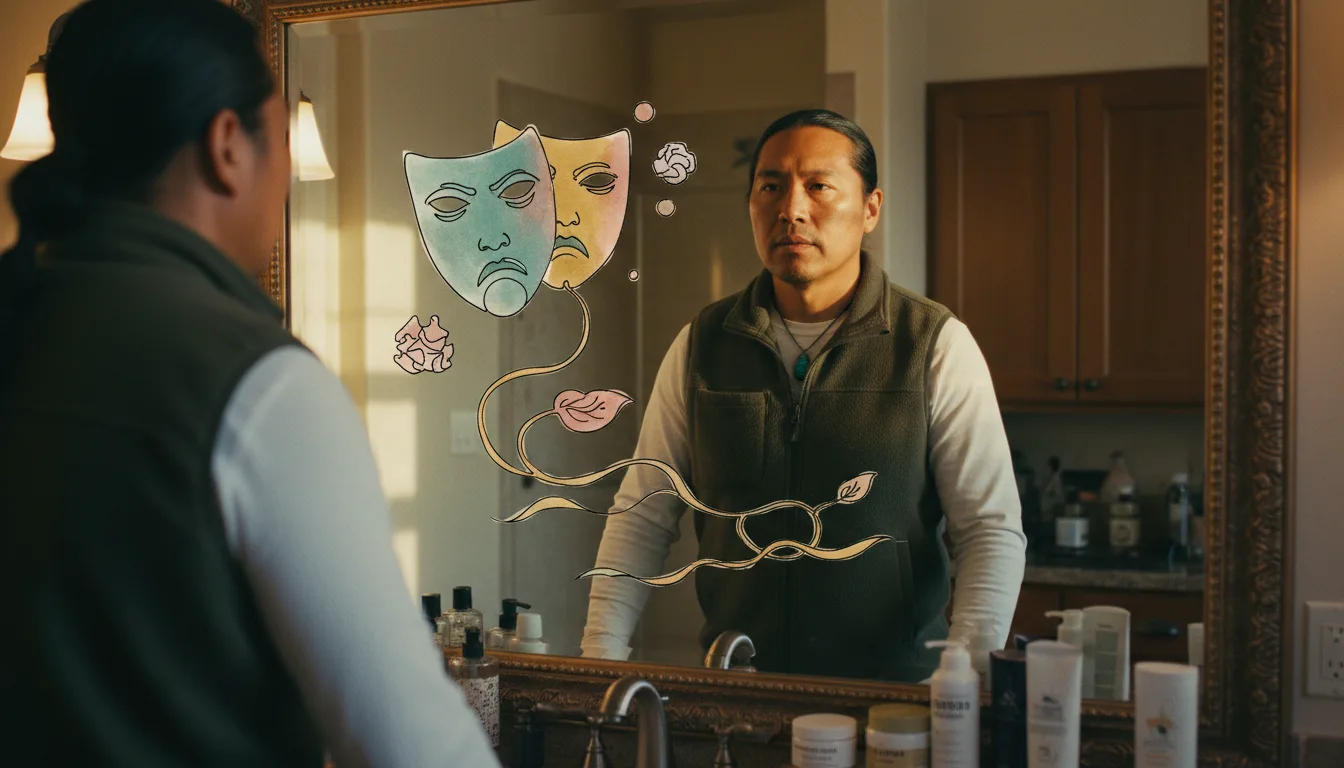
 Social settings often demand the most masking energy, even when the people involved are loved ones.
In practice, masking often looks like someone who is coping well on the surface while spending enormous energy behind the scenes. The gap between visible output and internal effort is the defining feature.
At work, a person who masks might volunteer for fewer projects than they could handle, not because they lack ambition, but because they know each task requires twice the planning others need. They may avoid spontaneous brainstorming sessions where impulsivity could surface. They might spend their lunch break re-reading emails to catch errors that a colleague would spot in one pass.
At home, masking can look like spending an entire Sunday "recovering" from a week of performing. It can look like a spotless living room achieved through a panicked cleaning sprint before guests arrive, with a bedroom door firmly closed. It can look like declining social invitations because the energy required to mask in a group is more than you have left.
In relationships, masking sometimes shows up as people-pleasing: agreeing to plans you cannot keep, suppressing emotional reactions to avoid conflict, or pretending you remember a conversation you have already forgotten. Over time, this creates a painful dynamic where the people closest to you may not understand why you seem fine in public but collapse in private.
If you recognize these patterns and want to explore whether attention difficulties might be part of the picture, noting when the mask slips most often, late afternoons, unstructured time, after travel, gives a clinician a concrete starting point.
What is the mental health cost of masking?
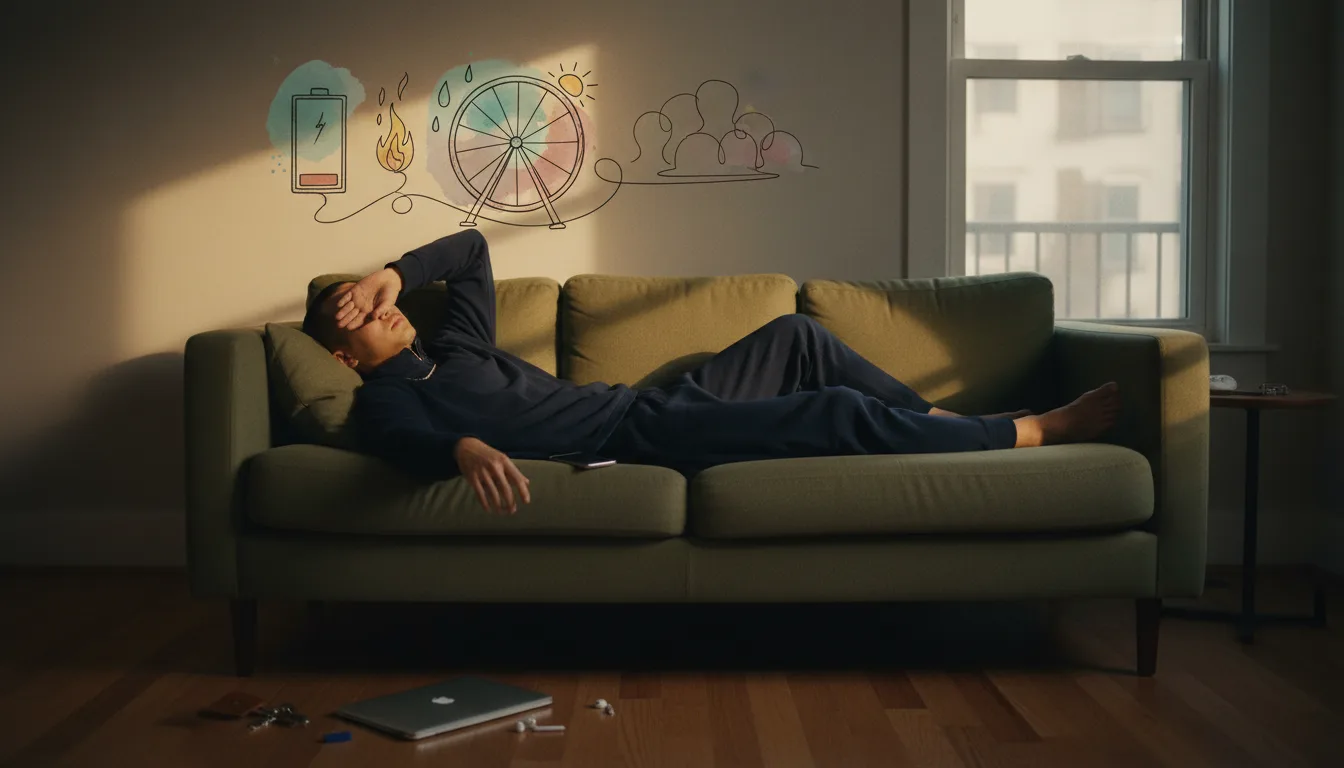
 The gap between looking 'fine' and feeling overwhelmed is where masking burnout builds over time.
Sustained masking is associated with lower life satisfaction and higher rates of depressive symptoms. A 2024 study of 329 women with ADHD found a significant negative association between social camouflaging and life satisfaction, and a positive correlation between camouflaging and depressive symptoms, even after controlling for demographic variables (Wicherkiewicz et al., 2024) [2].
The costs tend to accumulate in several areas:
Burnout
Masking requires constant self-monitoring: watching what you say, tracking social cues, managing impulsive reactions, and performing executive functions that do not come naturally. This is cognitively expensive. Many adults describe reaching a point where the system simply breaks down. Tasks that were manageable become impossible. Motivation disappears. This is often when people first seek help, sometimes for what looks like depression or anxiety rather than the underlying ADHD.
Identity confusion
A 2026 study using structural equation modeling found that ADHD symptom severity was linked to identity distress, with masking and self-esteem acting as mediating factors in that pathway (Hall et al., 2026) [3]. When you have spent years performing a version of yourself that meets other people's expectations, it can become genuinely difficult to know who you are without the mask. Many adults describe feeling like a fraud, a pattern that overlaps with imposter phenomenon.
Emotional exhaustion
The effort of suppressing emotional reactions throughout the day often leads to what people describe as "emotional flooding" in private. You hold it together at work, then snap at a partner over something small. This pattern can be confusing for everyone involved. Understanding how ADHD affects emotional regulation can help make sense of why the pressure builds.
"The diagnosis of ADHD is often complicated by masking coping mechanisms, an overlap of symptoms with other, more commonly diagnosed disorders."
Williams et al., 2023 [5]
Delayed diagnosis
Perhaps the most consequential cost of masking is that it works, at least outwardly. Clinicians, teachers, and family members may not see a problem because the person has learned to hide it. NICE guidelines note the importance of thorough clinical assessment that considers the full developmental history, not just current visible functioning (NICE NG87) [6]. When masking is effective, the person who needs help the most may be the least likely to receive it.
Why is masking especially common in women and girls?
Women and girls with ADHD are more likely to present with inattentive symptoms rather than the hyperactive, disruptive behaviors that historically triggered referrals. This means many girls learn to compensate early, developing masking strategies before anyone considers an ADHD evaluation.
Social expectations play a significant role. Girls are often socialized to be organized, attentive, and emotionally regulated. When they struggle with these things, the response is more likely to be "she needs to try harder" than "she might have ADHD." The result is a generation of women who built elaborate compensatory systems in childhood and carried them into adulthood without ever knowing why they needed them.
The Wicherkiewicz et al. (2024) study focused specifically on women with ADHD and found that camouflaging was linked to both lower life satisfaction and higher depressive symptoms (Wicherkiewicz et al., 2024). The Wurth et al. (2025) study, in which 79% of participants were female, similarly found that masking was commonly reported and context-dependent (Wurth et al., 2025).
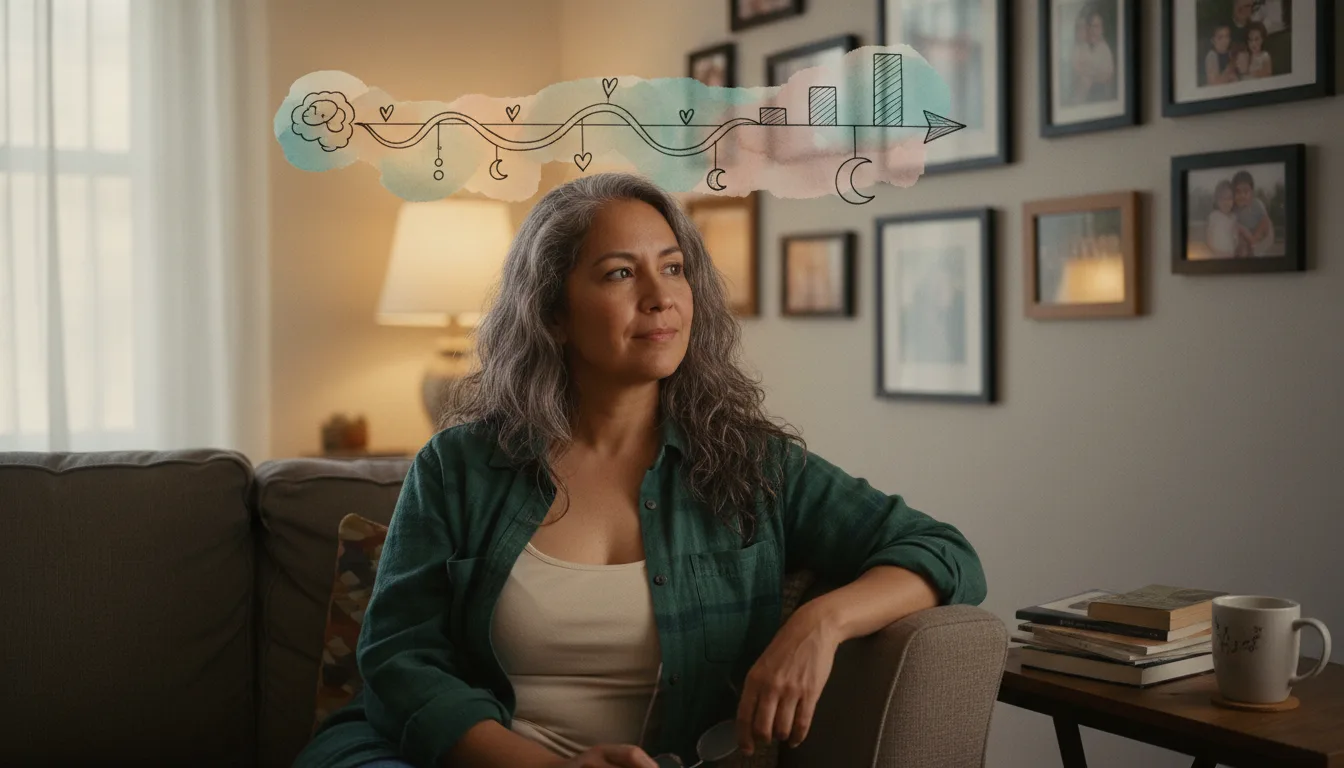
Many women describe a specific trajectory: performing well enough to avoid concern through school, hitting a wall in early adulthood when the demands of work, relationships, and possibly parenthood exceed their compensatory capacity, and only then beginning to question whether something deeper is going on. If this sounds familiar, our guide on ADHD in women covers the diagnostic patterns and challenges in more detail.
What does unmasking look like?
Unmasking is not a single dramatic moment. For most adults, it is a gradual process of recognizing which behaviors are authentic coping strategies and which are performances maintained at a cost. It often begins with diagnosis, or with the realization that a diagnosis might be relevant.
Some practical starting points:
- Identify your highest-cost masks. Which behaviors drain the most energy relative to their benefit? For some people, it is the constant email re-reading. For others, it is the social performance at group events. Start by noticing, not by changing.
- Choose safe contexts first. Unmasking does not mean disclosing your ADHD to everyone or dropping all compensatory strategies at once. It might mean letting a trusted friend know that you sometimes lose track of conversations, or telling a partner that you need quiet time after social events.
- Distinguish between masking and genuine coping. Not every compensatory strategy is harmful. A well-designed reminder system is a practical tool, not a mask. The difference is whether the strategy helps you function or whether it exists primarily to hide your difficulties from others.
- Expect grief. Many adults who begin unmasking experience a period of mourning for the years spent performing. This is a normal part of the process, not a sign that something is going wrong.
How can you build authentic coping strategies?
Authentic coping means finding ways to manage ADHD symptoms that work with your brain rather than against it, without requiring you to pretend you do not have ADHD. The goal is not to stop compensating entirely but to replace exhausting performances with strategies that are sustainable.
Practical approaches worth exploring
- External structure over internal willpower. Use timers, visual schedules, and body-doubling (working alongside someone else) to support focus. These are tools, not masks, because they address the actual difficulty rather than hiding it.
- Selective disclosure. You do not owe anyone your diagnosis. But telling a manager that you work best with written instructions, or telling a friend that you need reminders for plans, can reduce the energy spent hiding your needs.
- Energy budgeting. Track which activities drain you most and build in recovery time. This is not laziness. It is an honest accounting of what your brain requires.
- Therapeutic support. Cognitive behavioral therapy adapted for ADHD can help you identify masking patterns and develop alternatives. NICE guidelines recommend psychological interventions as part of a broader ADHD management plan (NICE NG87).
Questions to ask a clinician about masking
The Wurth et al. (2025) study found that perceiving benefits of one's diagnosis (such as "seeing things my own way" and "drive to find things out") was the variable most strongly associated with quality of life (Wurth et al., 2025). This suggests that moving toward a strengths-based understanding of your ADHD, rather than viewing it purely as something to hide, may be one of the most important shifts you can make.
If you are beginning to wonder whether long-standing patterns of overcompensation might point to ADHD, our free adult ADHD self-screener is a structured way to map how often you work twice as hard to look the same, useful evidence to bring to a clinician who understands masking.
 Infographic: key points about adhd masking.
Unmasking is not about dropping all coping strategies at once. It is about choosing which ones serve you.
Infographic: key points about adhd masking.
Unmasking is not about dropping all coping strategies at once. It is about choosing which ones serve you.
Frequently asked questions
What is the difference between ADHD masking and normal social adaptation?
Everyone adjusts their behavior in different social settings. ADHD masking becomes distinct when the effort required to appear "normal" is disproportionate to what most people experience, and when dropping the mask leads to visible difficulty with attention, organization, or impulse control. The key difference is the size of the gap between the performance and the baseline.
Can masking cause ADHD to go undiagnosed?
Yes. When compensatory strategies are effective enough to maintain outward functioning, clinicians, teachers, and family members may not recognize the underlying difficulty. A comprehensive review of adult ADHD identifies masking coping mechanisms as a factor that complicates diagnosis (Williams et al., 2023).
Is ADHD masking the same as autism masking?
The two share surface similarities, but researchers caution against assuming they are the same construct. A 2026 editorial argues that camouflaging measures developed for autism lack ADHD-specific validity and that the executive function demands of sustained concealment may operate differently in ADHD (Adamou et al., 2026).
Does masking affect mental health?
Research links higher levels of ADHD-related camouflaging to lower life satisfaction and more depressive symptoms, particularly in women (Wicherkiewicz et al., 2024). Masking has also been associated with identity distress and imposter phenomenon in college students with ADHD symptoms (Hall et al., 2026).
Why do women mask ADHD more than men?
Women are more likely to present with inattentive symptoms and are socialized toward behaviors (organization, emotional restraint, attentiveness) that naturally encourage masking. The research samples studying ADHD masking tend to be predominantly female, which may reflect both higher rates of masking and greater willingness to report it.
Can you unmask ADHD without a formal diagnosis?
You can begin noticing and reducing high-cost compensatory behaviors at any point. However, a formal diagnosis provides context that makes the process easier and opens access to clinical support, workplace accommodations, and therapeutic strategies designed for ADHD.
Does ADHD medication reduce the need to mask?
Many adults report that effective medication reduces the effort required for tasks like sustained attention and organization, which can lower the need for some masking behaviors. Medication does not eliminate masking entirely, because social and emotional masking patterns are often deeply ingrained habits. This is an area where combining medication with therapeutic support may be most helpful, though individual responses vary.
How do I know if I am masking ADHD or just anxious?
The two often overlap, and separating them without professional assessment can be difficult. One pattern many adults describe: if the anxiety is primarily about being "found out" or about maintaining performance that feels unsustainable, masking for an underlying attention difficulty may be part of the picture. A clinician experienced with ADHD can help distinguish between the two.
Is masking always harmful?
Not necessarily. Some compensatory strategies are genuinely helpful and sustainable. The harm comes when masking requires constant, exhausting effort, when it prevents you from getting support you need, or when it creates a gap between your public self and your private experience that leads to identity confusion or burnout.
At what age does ADHD masking usually start?
Many adults trace their masking behaviors back to childhood, often to early school years when social and academic expectations first created pressure to conform. The behaviors may not have been recognized as masking at the time, because the person (and the adults around them) did not have a framework for understanding ADHD.