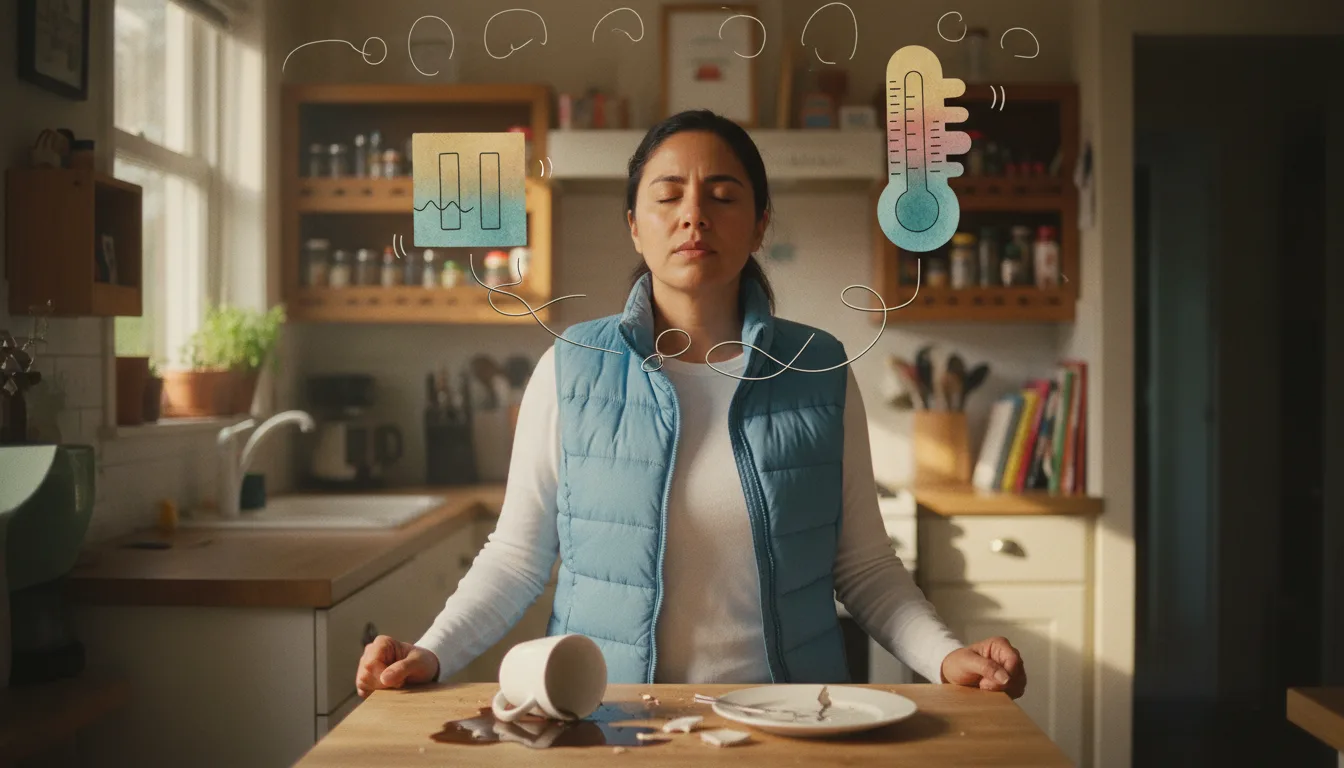
Is emotional dysregulation actually part of ADHD?
Emotional dysregulation is increasingly recognized as a core feature of ADHD, not just a side effect or a sign of a separate condition. A 2023 systematic review concluded that adults with ADHD consistently use fewer adaptive emotion regulation strategies than adults without ADHD, and that these difficulties are linked to symptom severity, executive functioning, and psychiatric comorbidity (Soler-Gutiérrez et al., 2023) [2].
Despite this growing evidence, the DSM-5 diagnostic criteria for ADHD still focus on inattention, hyperactivity, and impulsivity. Emotional symptoms are mentioned in the text description of the disorder but are not required for a diagnosis. This gap matters because many adults who struggle most with emotional intensity may not realize it is connected to ADHD at all.
Researchers have proposed several models to explain the overlap. Shaw and colleagues (2014) outlined three possibilities: emotional dysregulation and ADHD are correlated but distinct; emotional dysregulation is a core diagnostic feature of ADHD; or the combination represents a separate clinical profile altogether (Shaw et al., 2014) [1]. No consensus has been reached, but the clinical reality is clear: for many adults with ADHD, emotional difficulty is not secondary. It is often the symptom that causes the most damage to relationships, careers, and self-worth.
If you recognize yourself in these descriptions, learning more about your own patterns is a useful first step. You can explore common ADHD symptoms to see how emotional and cognitive features often overlap.
Why do emotions feel bigger with ADHD?
The intensity of emotions in ADHD appears to come from differences in how the brain processes, prioritizes, and regulates emotional information. Research points to dysfunction within a network involving the striatum, amygdala, and medial prefrontal cortex, areas responsible for detecting emotional signals and applying top-down control (Shaw et al., 2014) [1].
In practical terms, this can look like several things happening at once. The emotional signal arrives quickly and intensely (the amygdala responds strongly). The prefrontal cortex, which would normally help you evaluate whether the situation truly warrants that level of reaction, may be slower to engage. And the ability to shift attention away from the emotional trigger, something most people do automatically, may be impaired.
Christiansen and colleagues (2019) reviewed evidence across the lifespan and found that both general self-regulation deficits and specific emotional processing deficits contribute to the problem. Central and autonomic nervous system data suggest that people with ADHD show differences in how they activate during emotional tasks and how they recover afterward (Christiansen et al., 2019) [4].
This is not about being "too sensitive" or lacking willpower. The neurological systems that help most people dampen a strong reaction before it becomes behavior are working differently. A comment that a colleague shrugs off might land like a punch, not because you are overreacting, but because the braking system that would normally soften the impact is less effective.
What role does executive function play?
 Impulsive decisions often spike when emotions are already running high, because the braking system is already overloaded.
Executive function acts as the brain's management system for planning, prioritizing, and regulating behavior, including emotional behavior. When executive function is impaired, the gap between feeling an emotion and acting on it shrinks. Adults with ADHD often describe having almost no pause between a trigger and a reaction, as though the emotion bypasses any filter.
Soler-Gutiérrez and colleagues (2023) found that emotion dysregulation in adults with ADHD was associated with executive functioning difficulties, and that adults with ADHD more frequently relied on non-adaptive regulation strategies (such as rumination, suppression, or avoidance) compared to adults without ADHD (Soler-Gutiérrez et al., 2023) [2].
Several specific executive function skills are involved:
- Inhibition: The ability to stop an automatic response. With weaker inhibition, you might send the angry email before you have finished processing why you are upset.
- Working memory: Holding context in mind while you respond. If working memory is limited, you may lose track of the bigger picture ("this is a minor scheduling conflict") and respond only to the immediate feeling ("they don't respect my time").
- Cognitive flexibility: Shifting perspective or reappraising a situation. Difficulty here can mean getting locked into one interpretation of events, even when evidence suggests another reading.
- Emotional working memory: Holding an emotion in awareness without immediately reacting to it. This skill allows you to notice "I am angry" and then decide what to do. When it is impaired, the anger and the action feel like the same event.
Understanding which executive function skills are involved can help you target strategies more precisely. If inhibition is your biggest challenge, strategies that build in physical pauses (leaving the room, counting) may help more than strategies focused on reappraisal.
Spotting which executive function is loudest in a given flare-up is often more useful than trying to fix emotion regulation as a whole.
How does ADHD-related anger differ from other anger?
ADHD-related anger tends to arrive suddenly, peak quickly, and often feel disproportionate to the trigger. Many adults describe a flash of intense frustration over something minor, like a slow internet connection or a misplaced comment, followed by regret once the wave passes. The anger itself is real, but the speed and scale often surprise the person experiencing it as much as anyone around them.
This pattern can be difficult to distinguish from anger in other conditions, and the overlap is genuine. Mood disorders such as bipolar disorder involve irritability, and borderline personality disorder involves intense emotional reactions and interpersonal sensitivity. A thorough clinical history is essential for accurate diagnosis because the surface-level behavior can look similar across conditions, even though the underlying mechanisms differ.
Some features that clinicians look for when considering ADHD-related anger specifically:
This table is a rough guide, not a diagnostic tool. Many people have more than one condition, and the boundaries between these patterns are clinically blurry. If anger is causing significant problems, a clinician who understands ADHD, mood disorders, and personality patterns can help sort out what is driving the difficulty.
Adults with ADHD sometimes find that anger is the emotion they show, even when the underlying feeling is hurt, shame, or overwhelm. This is worth exploring with a therapist, because the strategies for managing anger-as-a-cover differ from strategies for managing primary frustration.
What happens during emotional flooding and shutdown?
Emotional flooding in ADHD is the experience of being overwhelmed by feeling to the point where thinking clearly becomes impossible. Adults describe it as a wave that takes over: tears come without warning, frustration becomes all-consuming, or a sense of panic fills the body. The cognitive system essentially goes offline because the emotional signal is too loud for the prefrontal cortex to manage.
Shutdown is the opposite end of the same spectrum. When the emotional load becomes too high, some adults with ADHD go blank. They stop talking, withdraw, or feel numb. This is not indifference. It is a protective response when the system is overwhelmed, similar to a circuit breaker tripping.
Both flooding and shutdown can be confusing for the people around you. A partner may interpret shutdown as stonewalling. A colleague may see flooding as instability. Understanding that these are neurological responses, not character flaws, can change how you and the people in your life approach difficult moments. Learning about how ADHD affects relationships can help both you and the people close to you recognize these patterns.
Many adults with ADHD also describe a pattern sometimes called rejection sensitive dysphoria (a widely reported experience, not a formal diagnostic term) in which perceived criticism or rejection triggers an intense emotional response that can look like flooding, shutdown, or both. You can read more about rejection sensitive dysphoria in ADHD to understand how this pattern works and what helps.
Some adults learn to mask their emotional responses in professional or social settings, appearing calm while internally overwhelmed. Masking can be effective in the short term but tends to increase exhaustion and delay the point at which someone seeks help.
What strategies help with ADHD emotional regulation?
 Hyperfocus on one input can block awareness of surroundings, a pattern that also applies to emotional tunneling.
The most effective approach for most adults combines building awareness of emotional patterns with practicing specific skills that create space between a trigger and a response. Because stimulant medication may not consistently normalize emotion regulation capacity on its own (Greenfield et al., 2024) [5], behavioral strategies are an important part of the picture regardless of whether you take medication.
Label the emotion before acting on it
Naming what you feel ("I am frustrated," "I feel rejected," "This is shame") activates the prefrontal cortex and can reduce the intensity of the amygdala response. This is not about analyzing the emotion. It is about putting a word on it before it drives behavior. Some people find it helpful to rate the intensity on a 1 to 10 scale, which adds a layer of cognitive processing that slows the reaction.
Build in a physical pause
When you notice a strong emotion rising, create a literal gap before responding. Leave the room for two minutes. Put your phone face-down. Take three slow breaths. The goal is not to suppress the feeling but to give your prefrontal cortex time to come online. For many adults with ADHD, even a 90-second pause changes the outcome.
Use a structured self-monitoring tool
Tracking emotional reactions over days or weeks can reveal patterns you cannot see in the moment: specific triggers, times of day when regulation is harder, situations that reliably lead to flooding. The following template can be adapted to a notebook or spreadsheet:
After two weeks, review the log with curiosity rather than judgment. Look for patterns: Does intensity spike when you are sleep-deprived? Do certain people or contexts reliably trigger flooding? This data becomes useful in therapy and in conversations with a prescribing clinician.
Practice cognitive reappraisal (when calm)
Reappraisal means generating an alternative interpretation of a situation. "She didn't reply to my message because she is busy" instead of "She didn't reply because she is angry with me." This skill is harder for adults with ADHD because it requires cognitive flexibility, but it can be practiced and strengthened. The key is to practice when you are calm, not in the middle of a reaction. Over time, the alternative interpretations become more accessible during emotional moments.
Mindfulness-based approaches
Mindfulness training teaches you to observe an emotion without immediately fusing with it. Research on mindfulness for ADHD is still developing, but the core skill (noticing a feeling, letting it exist without acting on it, and watching it change) directly targets the gap between trigger and response that executive function difficulties shrink. Even five minutes of daily practice can begin to build this capacity. Guided apps or short body-scan exercises are often more accessible for adults with ADHD than long, silent meditation sessions.
Environmental design
Some emotional reactions are preventable with better environmental setup. If transitions trigger frustration, build buffer time between tasks. If sensory overload leads to shutdown, use noise-canceling headphones in open offices. If hunger reliably worsens irritability, set alarms for meals. These are not emotional strategies in the traditional sense, but they reduce the load on a regulation system that is already working harder than average.
"Emotion dysregulation is prevalent in ADHD throughout the lifespan and is a major contributor to impairment."
Shaw et al., 2014 [1]
When should you seek professional support?
Seek professional help when emotional reactions are causing repeated harm to relationships, job performance, or your own safety. If you find yourself regularly saying things you regret, losing jobs or friendships over emotional blowups, or feeling unable to leave the house because of emotional exhaustion, these are signs that self-help strategies alone may not be enough.
A clinician experienced with ADHD can help in several ways:
- Accurate diagnosis. Emotional dysregulation overlaps with mood disorders, anxiety, PTSD, and personality disorders. A thorough assessment can clarify what is driving the difficulty and whether more than one condition is involved.
- Cognitive behavioral therapy (CBT) adapted for ADHD. Standard CBT teaches emotion regulation skills, and ADHD-adapted versions account for executive function difficulties by using more structure, shorter exercises, and concrete tools.
- Dialectical behavior therapy (DBT) skills. Originally developed for borderline personality disorder, DBT's distress tolerance and emotion regulation modules are increasingly used with ADHD populations. The skills (such as opposite action, TIPP for crisis moments, and interpersonal effectiveness) are practical and concrete.
- Medication review. If you are already taking ADHD medication, a clinician can assess whether your current treatment is helping with emotional symptoms or whether adjustments might be useful. Greenfield and colleagues (2024) found that stimulant medication did not consistently normalize emotion regulation capacity in their clinical cohort, which suggests that medication alone may not be sufficient for emotional dysregulation (Greenfield et al., 2024) [5]. This does not mean medication is unhelpful, but it means behavioral strategies remain important.
Tharaud and colleagues (2025) found that specific emotion regulation difficulties, particularly catastrophizing and becoming distracted when upset, served as bridges between ADHD symptoms and later depression symptoms in a large longitudinal study (Tharaud et al., 2025) [6]. This finding reinforces why addressing emotional regulation early matters: it may reduce the risk of developing secondary mood problems.
If emotional intensity keeps outrunning the rest of your day, our free ADHD self-test is a five-minute starting point before booking an appointment.
Questions to ask a clinician about emotional dysregulation
If you are preparing for an appointment, these questions can help you get the most from the conversation:
 Infographic: key points about adhd emotional regulation.
These strategies work best in combination and improve with consistent practice over weeks.
Infographic: key points about adhd emotional regulation.
These strategies work best in combination and improve with consistent practice over weeks.
Frequently asked questions
Is emotional dysregulation an official ADHD symptom?
Not in the current DSM-5 criteria, which focus on inattention, hyperactivity, and impulsivity. However, a growing body of research describes emotional dysregulation as a core feature that affects an estimated 34 to 70 percent of adults with ADHD (Hirsch et al., 2019). Many clinicians now assess for it routinely, even though it is not required for diagnosis.
How is ADHD emotional dysregulation different from bipolar disorder?
ADHD emotional reactions tend to be rapid, triggered by specific events, and short-lived (minutes to hours). Bipolar mood episodes typically last days to weeks and are less tied to specific triggers. The two conditions can co-occur, so a thorough clinical history is essential for accurate diagnosis. A clinician will look at the timeline, pattern, and context of mood changes.
Can ADHD medication help with emotional regulation?
Some adults report that stimulant or non-stimulant ADHD medications reduce emotional reactivity, but research suggests that medication does not consistently normalize emotion regulation capacity (Greenfield et al., 2024). Behavioral strategies such as CBT and DBT skills training are often recommended alongside medication for emotional symptoms.
What is rejection sensitive dysphoria?
Rejection sensitive dysphoria (not a formal diagnosis, but a commonly described pattern) refers to intense emotional pain triggered by perceived rejection or criticism. Many adults with ADHD report this experience. It can cause sudden sadness, anger, or withdrawal after events that others might find mildly disappointing. You can learn more about rejection sensitive dysphoria and ADHD.
Why do I cry so easily with ADHD?
Crying easily can be a sign of emotional flooding, where the emotional signal overwhelms the brain's ability to regulate the response. This is related to the same executive function and neural network differences that affect other emotional reactions in ADHD. It does not mean you are weak. It means the braking system that would normally modulate the response is less effective.
Does emotional dysregulation get worse with age?
Research has not established a clear pattern of worsening with age. However, life demands increase over time (careers, relationships, parenting), which can make existing regulation difficulties more visible and more costly. Some adults find that strategies they relied on in their twenties stop working under heavier demands. Hormonal changes, particularly during perimenopause, may also affect emotional regulation for some women.
Can mindfulness really help with ADHD emotions?
Mindfulness trains the skill of observing an emotion without immediately acting on it, which directly targets the gap between trigger and response. Research on mindfulness specifically for ADHD emotional regulation is still developing, but the core skill is well-matched to the difficulty. Short, guided practices tend to be more accessible for adults with ADHD than long silent sessions.
How do I explain ADHD emotional reactions to my partner?
Start by naming the pattern: "When I react intensely, it is not that I think the situation is that serious. My brain processes the emotional signal faster and louder than it should, and my ability to pause before reacting is impaired." Sharing specific examples and discussing strategies together can help. Reading about how ADHD affects relationships together may also be useful.
Is emotional dysregulation the same as being "too sensitive"?
No. "Too sensitive" implies a personality trait or a choice. Emotional dysregulation in ADHD is associated with measurable differences in brain structure and function, including differences in how the amygdala, prefrontal cortex, and striatum interact during emotional processing (Shaw et al., 2014). It is a neurological pattern, not a character flaw.
Should I see a therapist or a psychiatrist for emotional dysregulation?
Both can help, and the choice depends on what you need most. A psychiatrist can assess whether medication adjustments might reduce emotional reactivity. A therapist (particularly one trained in CBT or DBT) can teach specific regulation skills. Many adults benefit from both. If you are unsure where to start, a comprehensive ADHD evaluation can help clarify the best path.